The hard ones
Honeybird vs the honeyguides
Fastest separator
Size and bill: Honeybird tiny with a fine bill; Lesser Honeyguide sparrow-sized with a stubby bill; Greater bigger, male with a pink bill.
Extra clincher
All flash white outer tail feathers; only the Greater guides people to honey.
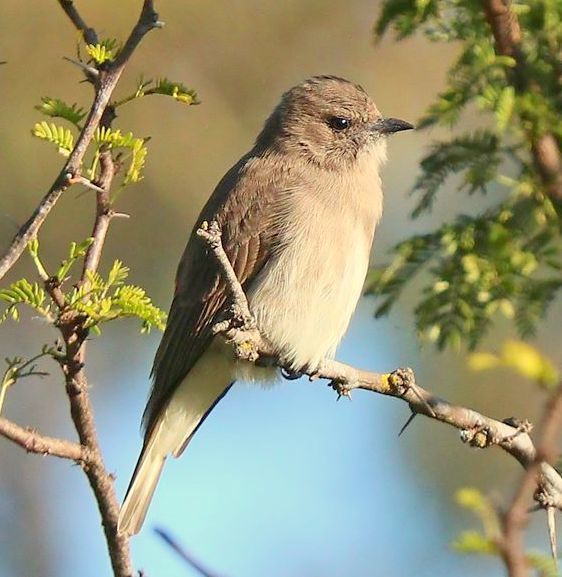 Brown-backed HoneybirdSkerpbekheuningvoël
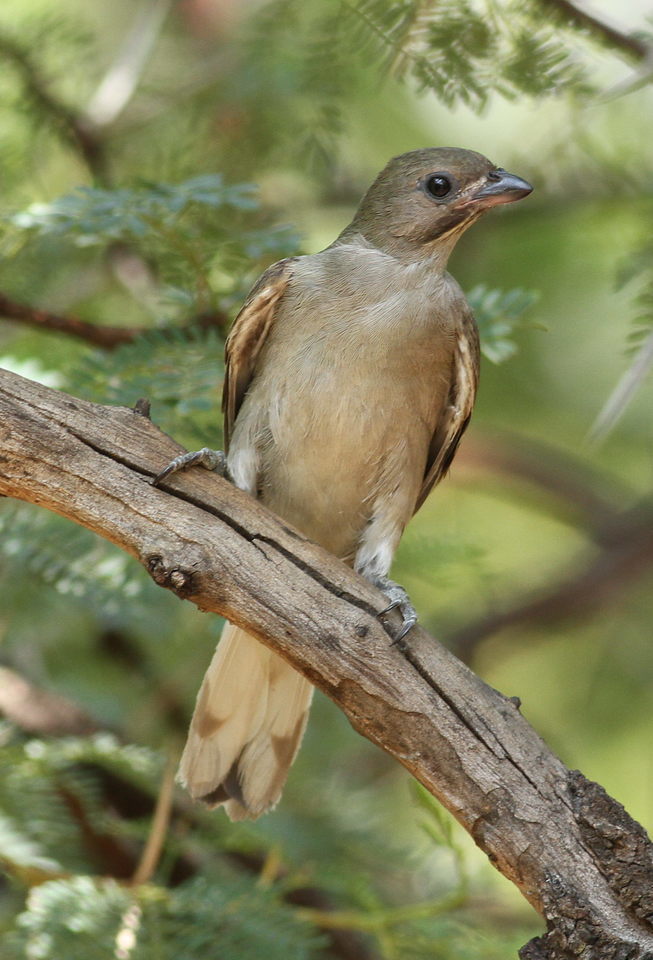 Lesser HoneyguideKleinheuningwyser
 Greater HoneyguideGrootheuningwyser
Quick readTiny drab flycatcher-like honeyguide with white outer tail feathers.
Quick readSmall olive honeyguide with a stubby bill, calling 'klew-klew' from one perch.
Quick readThe bird that leads people to bees' nests; male has a pink bill and black throat.
Look11-13 cm. Grey-brown, pale below, white outer tail obvious in flight, thin bill.
Look13-15 cm. Grey head, dark moustache, olive back, white outer tail feathers.
Look19-20 cm. Male dark crown, black throat, white cheek, pink bill. Female plainer brown.
BehaviourSits upright like a flycatcher; display flights.
BehaviourCalls repeatedly from a set perch; does not guide people.
BehaviourCalls 'vic-tor' from a fixed perch; guides honey-hunters with chattering.
CallDry 'zwiit' and trills.
CallRepeated 'klew-klew-klew'.
CallRepeated 'vic-tor, vic-tor'.
Legs, flight or clinchervs the honeyguides: tiny, warbler-like with a fine bill; flits and hovers like a flycatcher
Legs, flight or clinchervs Greater Honeyguide: sparrow-sized, dull grey-green, short stubby bill; vs Honeybird: chunkier, stubby bill
Legs, flight or clincherNo single clincher; use the look and call.
NestBrood parasite (no nest). Brood parasite of cup-nesters: warblers, white-eyes and apalises.
NestBrood parasite (no nest). Brood parasite of barbets.
NestBrood parasite (no nest). Brood parasite of barbets, woodpeckers and hoopoes; the chick kills host young with a bill hook.
MigrationResident
MigrationResident
MigrationResident
HabitatTrees
HabitatTrees
HabitatTrees
Likelihood herepossible, 2% of visits
Likelihood herepossible, 2% of visits
Likelihood herelikely, 10% of visits