The hard ones
Cormorant vs darter
Fastest separator
Cormorants have a hooked bill and grab; the darter has a dagger bill, spears fish and swims low on a thin snake neck.
Extra clincher
Small and dark = Reed; large and white-chested = White-breasted; only a kinked neck showing = Darter.
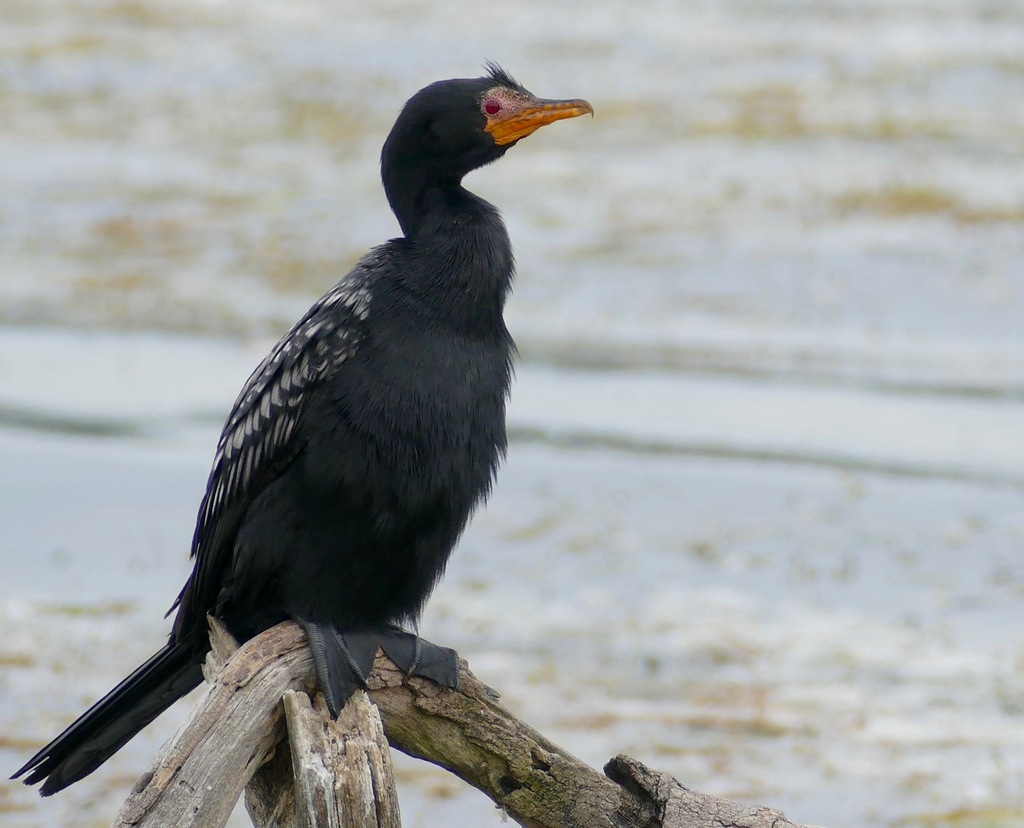 Reed CormorantRietduiker
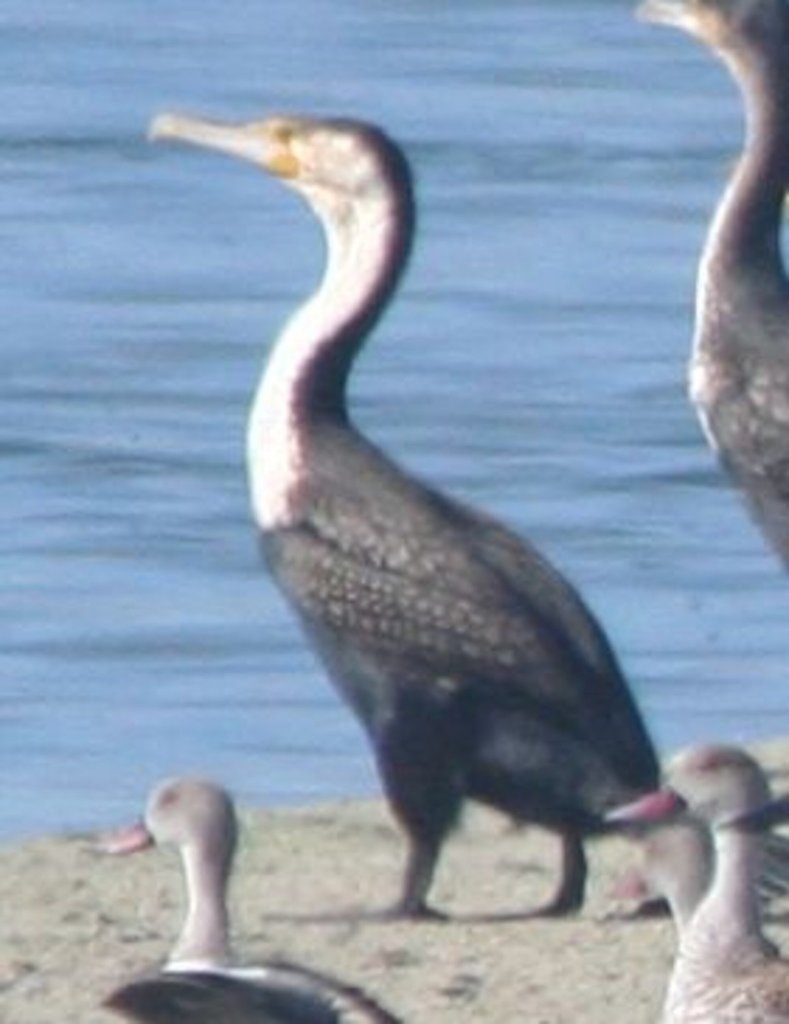 White-breasted CormorantWitborsduiker
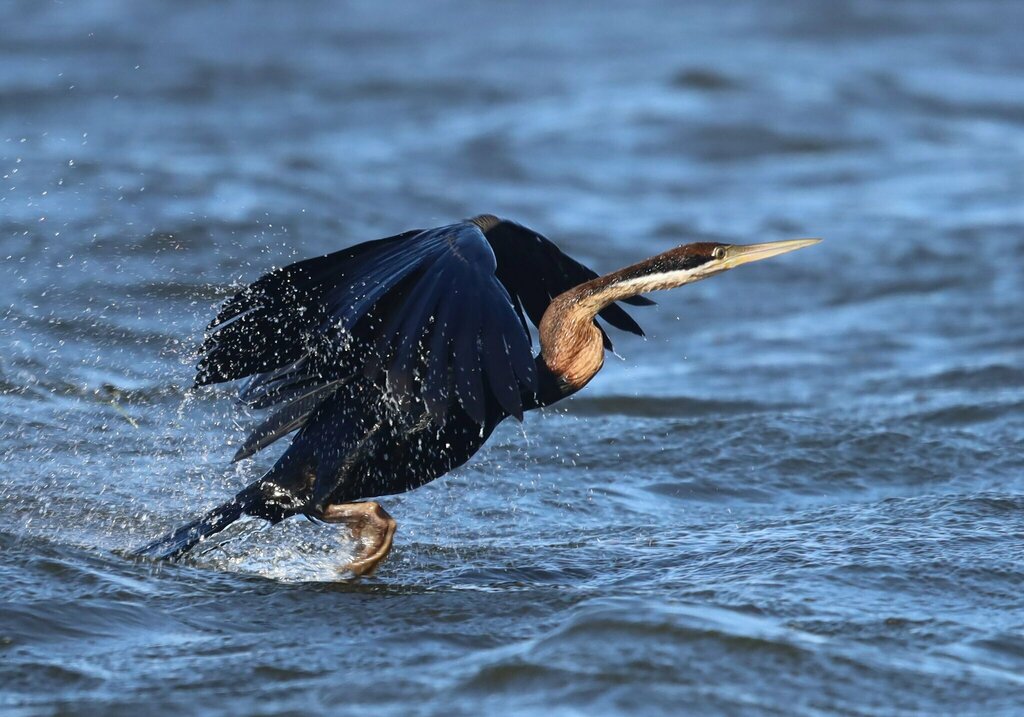 African DarterSlanghalsvoël
Quick readSmall long-tailed cormorant drying its wings on a dead branch over the dam.
Quick readLarge cormorant with a white throat and breast.
Quick readThe snake-bird: swims with only its thin neck showing and spears fish.
Look50-55 cm. Black with scaly wing coverts, red eye, short crest when breeding; immatures brown with a white belly.
Look80-100 cm. Black with a white throat and breast, green eye, short tail; immatures white below.
Look79 cm. Long thin kinked neck, dagger bill; male rufous neck with a white stripe.
BehaviourDives for small fish; perches wings-spread to dry.
BehaviourDives for larger fish; dries its wings on dead trees and islands.
BehaviourDries its wings on branches; spears fish underwater.
CallMostly silent; cackles at the colony.
CallGrunts at the nest.
CallCroaks at the nest.
Legs, flight or clinchervs White-breasted Cormorant: much smaller, long tail; adult has no white breast
Legs, flight or clinchervs Reed Cormorant: much larger, white breast, short tail
Legs, flight or clincherNo single clincher; use the look and call.
NestStick platform in a tree or reeds. Stick-and-reed platform in a waterside tree or reeds, in colonies with herons.
NestStick platform in a tree or reeds. Stick platform in trees or on islands, colonial.
NestStick platform in a tree or reeds. Stick platform in trees over water, colonial.
MigrationResident
MigrationResident
MigrationLocal or nomadic, from Regional wetlands
HabitatDams
HabitatDams
HabitatDams
Likelihood herenear-certain, 17% of visits
Likelihood herepossible, 4% of visits
Likelihood herepossible, 2% of visits